
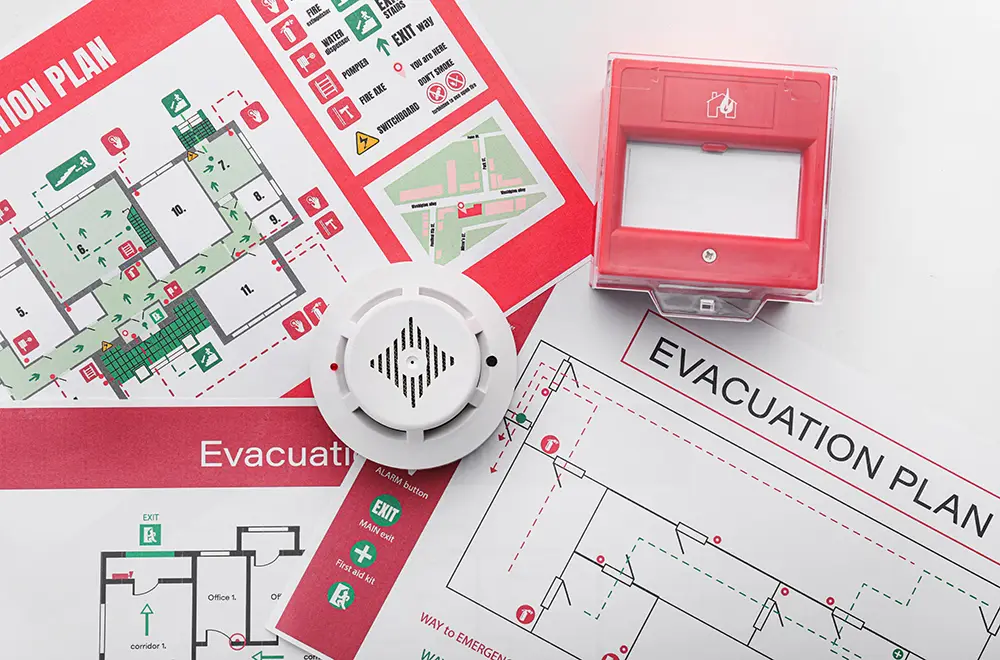
As a contractor or project manager, you know that delays on a construction project can be costly. One of the most common, yet avoidable, sources of holdups is an incomplete or inaccurate fire protection plan review. Submitting the wrong documents, missing critical details, or not following your local fire authority’s requirements can lead to rejections, resubmittals, and unexpected project delays. A professional fire protection plan review ensures your plan is accurate, complete, and compliant before it reaches an inspector’s desk, saving you time, money, and frustration.
What Is a Fire Protection Plan Review?
A fire protection plan review is the process by which your submitted plans are carefully examined by the Authorities Having Jurisdiction (AHJs) or a professional reviewer to ensure compliance with local codes and life-safety standards. These reviews are mandatory before you can obtain permits or begin construction. By confirming that your fire safety systems, such as sprinklers, alarms, and suppression systems, are properly designed for the building’s occupancy and specific hazards, the review catches costly inconsistencies early in the process. Ultimately, this ensures the project meets all minimum safety requirements and protects the building’s future occupants.
Who Requires a Fire Protection Plan Review?
Plan reviews are not optional; they are a mandatory step enforced by local, state, or national jurisdictions before permits or approvals can be granted. Requirements vary depending on location, project type, and occupancy classification, but all contractors must satisfy the Authorities Having Jurisdiction (AHJs) to move forward. Without a properly reviewed plan, projects can face delays, rework, or even fines, making early understanding of these requirements essential for successful project execution.
Authorities Having Jurisdiction (AHJs)
AHJs are the officials responsible for reviewing and approving fire protection plans, including city or county fire marshals, building departments, or fire prevention divisions. Each AHJ sets its own expectations for documentation, submittal formats, and level of detail. Understanding these requirements upfront helps contractors avoid back-and-forth resubmissions, keeps approvals on track, and ensures that fire safety systems meet both jurisdictional and safety standards.\
Core Documents Contractors Must Submit
Before diving into construction, contractors must submit a complete set of core documents for a thorough review of the plan. Accuracy, coordination, and consistency across all documents are critical to avoid delays or rejections. Below is an overview of the primary materials AHJs expect:
Fire Protection Plan Drawings
Your drawings form the backbone of the plan review process. They must clearly illustrate every aspect of your fire safety systems, including:
- Sprinkler system layouts showing all zones and coverage areas.
- Fire alarm device locations, including smoke and heat detectors, pull stations, and notification devices.
- Standpipes, risers, and fire pump locations, ensuring accessibility and code compliance.
Completeness here is critical. Missing or unclear details are the leading cause of plan rejections.
Fire Protection Plan Calculations
Alongside drawings, accurate calculations demonstrate that your system can handle the anticipated fire hazard:
- Hydraulic calculations to confirm adequate pressure and flow at each sprinkler head.
- Water supply data showing available municipal or on-site water sources.
- System demand versus available flow confirms that the design can handle maximum occupancy scenarios.
Submitting these calculations proves that your fire protection systems will operate effectively in an emergency.
Equipment & Product Submittals
AHJs also require supporting documentation for all components used in the fire protection system:
- Manufacturer cut sheets detailing materials and performance.
- Listings and approvals confirming components meet recognized safety standards.
- System component specifications, including valves, pumps, alarms, and suppression devices.
Providing complete product submittals ensures that each element in the fire protection plan is approved for installation and inspection.
Code & Standard References Typically Required
Fire protection plans are reviewed against a combination of local building codes, adopted fire codes, and nationally recognized safety standards. In most jurisdictions, this includes the International Building Code (IBC) and the International Fire Code (IFC). While these codes often mandate the installation of fire systems, they direct designers to NFPA 13 for fire sprinkler system evaluation and NFPA 72 for fire alarm signaling and installation. These standards ensure systems are designed to meet the correct occupancy, hazard classification, and life safety requirements.
Common Submission Mistakes That Delay Approval
Even experienced contractors encounter delays during the plan review process. Missing or inconsistent information can result in costly rework, slowed project timelines, and frustrated clients. A thorough plan review minimizes these risks by identifying gaps before submission and ensures that your drawings, calculations, and documentation meet the AHJ’s requirements.
Incomplete Drawings or Missing Details
Missing device locations, riser diagrams, or system notes are among the most common reasons for plan rejection. Oversights such as unlabeled components, missing legends, or unclear layouts prompt AHJs to request resubmittals, which can directly affect construction schedules. Accurate, detailed drawings are the first step to smooth approvals and fewer inspection delays.
Uncoordinated Plans Between Trades
Conflicts between fire protection, mechanical, electrical, and architectural plans frequently cause review and approval issues. Mismatched layouts can confuse inspectors and force multiple corrections. Coordinating all trades before submitting your plan ensures AHJs can efficiently review the project, reducing costly back-and-forth.
Incorrect Code References
Referencing outdated editions of fire codes or using the wrong jurisdiction-specific standards is a frequent source of delays. AHJs expect contractors to follow local requirements, and professional plan reviewers can verify that all codes, ordinances, and safety standards align with the AHJ’s expectations. This prevents rejections based on compliance errors and keeps projects moving forward.
Residential vs Commercial Fire Protection Plan Requirements
Residential projects generally have simpler plans, focusing on basic sprinkler coverage and alarm systems. Commercial projects, on the other hand, often involve multiple systems, higher occupancy loads, complex suppression systems, and stricter compliance standards. Recognizing the differences early helps contractors tailor submissions to meet AHJ expectations and avoid delays.
Why Professional Fire Protection Plan Reviews Matter
Engaging a professional reviewer can save contractors significant time and resources. Proper reviews lead to faster approvals, fewer resubmittals, improved coordination with AHJs, and reduced overall risk. Professional plan reviews ensure that every submittal aligns with safety standards, local codes, and project requirements, providing peace of mind throughout construction.
How Green Tag Engineering Supports Contractors
Green Tag Engineering helps contractors navigate the complexities of fire protection plan submissions with experience, precision, and a focus on compliance. By ensuring fire protection plans are complete, accurate, and properly coordinated, we help streamline approvals, reduce resubmittals, and support smooth interactions with AHJs. Contractors can rely on our expertise to minimize delays and maintain project schedules without compromising safety.
Fire Plan Review FAQs
What is included in a fire protection plan review?
A comprehensive review includes drawings, hydraulic calculations, equipment submittals, and verification against applicable fire codes and safety standards.
Who is responsible for submitting fire protection plans?
Contractors or project managers are generally responsible for preparing and submitting plans to the local AHJ for approval.
How long does a fire protection plan review take?
Review times vary by jurisdiction, project complexity, and completeness of submittals, ranging from a few days to several weeks.
Can a project fail inspection due to plan review errors?
Yes, incomplete or non-compliant plans can trigger rework or permit delays, highlighting the importance of a thorough fire protection plan review before construction begins.